Algerian regulations

Law No. 01-19 in Algeria

Understanding waste management regulations and the obligations of businesses

Enacted on

12 Dec 2001

Official Journal

No. 77

Amended by

Law 25-02 (2025)

Law No. 01-19 in Algeria

Waste management is now a major issue for environmental protection, public health and economic development in Algeria. As households, businesses and industry produce ever larger volumes of waste, the Algerian legislator has gradually built a regulatory framework to organise its management, collection, treatment and recovery.

At the heart of this framework is Law No. 01-19 of 12 December 2001 on the management, control and disposal of waste. It defines the responsibilities of waste producers and holders, sets out the categories of waste, regulates collection and treatment, and provides penalties for non-compliance.

Law No. 25-02 of 20 February 2025 has since amended and supplemented it, introducing new principles around the circular economy, eco-design and extended producer responsibility.

  • What does this regulation require?
  • What are the obligations of businesses in Algeria?
  • How do you set up compliant waste management?
01

Law No. 01-19: what is its purpose?

Enacted on 12 December 2001 and published in Official Journal No. 77 of 15 December 2001, Law No. 01-19 sets the fundamental rules governing the management, control and treatment of waste in Algeria.

Its main purpose is to organise the entire waste management cycle, from production to recovery or final disposal. Article 2 rests on several core principles:

Prevention at source

Avoid or reduce the production of waste and its harmfulness.

Sorting and collection

Set up systems that separate waste according to its type.

Transport and treatment

Ensure each category of waste is handled appropriately.

Recovery

Encourage reuse, recycling and the recovery of materials or energy.

Environmental protection

Manage waste without risk to public health or ecosystems.

Information and awareness

Inform citizens about waste-related risks and encourage good practice.

Waste is no longer seen only as something to dispose of, but also as a resource that can be fed back into the economy.

02

The categories of waste defined by the law

Article 5 of Law No. 01-19 classifies waste into three main categories. The distinction matters, because collection, transport, treatment and recovery conditions differ by type.

Household and similar waste

2.1

Household and similar waste

Waste from households and similar waste from industrial, commercial, craft and other activities, when its nature and composition are comparable.

In a business, for example:

The nature of the activity and the composition of the waste determine its classification.

Special and hazardous special waste

2.2

Special and hazardous special waste

Produced by industrial, agricultural, medical, service and other activities, it cannot be handled like household waste. Hazardous special waste poses particular risks to public health or the environment.

For example:

  • Certain chemical waste
  • Hazardous used oils
  • Contaminated industrial waste
  • Hazardous healthcare waste
  • Products containing harmful substances

It must be entrusted to operators and facilities authorised for its category (detailed requirements).

Inert waste

2.3

Inert waste

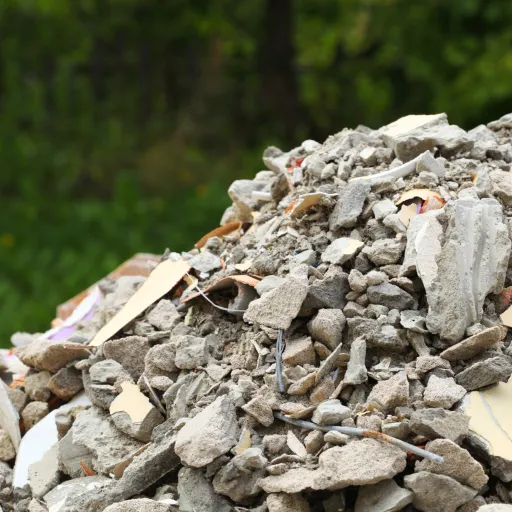
From construction, demolition, renovation, quarries and mines, it undergoes no significant physical, chemical or biological change.

For example:

  • Rubble
  • Bricks
  • Concrete
  • Uncontaminated demolition materials
  • Soil and stones from building sites

Collection, sorting, transport and landfilling are the responsibility of those who generate it.

03

What are the obligations of businesses?

Law No. 01-19 does not only concern local authorities or collection operators. It also places obligations on individuals and legal entities that produce or hold waste.

Businesses must therefore build waste management into their organisation and day-to-day operations.

Article 6

Prevent and reduce waste

Waste generators and holders must take the necessary steps to avoid producing waste wherever possible. The amended law strengthens this through eco-design and the circular economy.

Act before materials become waste.

  • Cutting unnecessary packaging
  • Limiting single-use consumables
  • Going paperless where possible
  • Using recyclable or reusable materials
  • Optimising purchasing
  • Extending equipment lifespan
Article 7

Ensure waste is recovered

Every generator or holder must ensure, directly or through eco-organisations, the recovery of waste arising from the materials it imports or sells and the products it manufactures.

This obligation on products placed on the market is distinct from the general duty to manage waste generated by operations.

Article 8

Ensure environmentally sound disposal

Where waste cannot be avoided or recovered, the generator or holder must ensure, at its own expense, that it is disposed of in an environmentally sound manner.

The business remains responsible for where its waste ends up, which is why traceability matters.

  • Handing waste to a third party does not end your responsibility
  • Handling must comply with applicable law
  • Choose suitable service providers and facilities
Nrecycli Office

How Nrecycli Office helps

We audit your waste streams, send each recyclable material to the right channel and give you a record of what was collected, so you know exactly where your waste goes.

04

Sorting and collecting waste in the workplace

Sorting is an essential step: it separates materials by type, making collection, transport and routing to the right recovery channels easier.

For businesses whose waste is similar to household waste, Article 35 requires them to use the sorting, collection and transport system provided by the bodies designated under the law.

Effective workplace sorting relies on:

  1. 1

    Identify the waste produced

    Plastic, paper, cardboard, aluminium, organic waste and other specific categories generated by the business.

  2. 2

    Install suitable equipment

    Bins, sorting stations and collection points right where waste is produced.

  3. 3

    Engage employees

    Sorting instructions, accepted materials and good habits.

  4. 4

    Organise collection

    Route sorted waste to suitable treatment or recovery channels.

  5. 5

    Track quantities

    Measure how the system performs and its environmental results.

Well-organised sorting reduces mistakes, improves the quality of recovered materials and makes recycling easier.

Nrecycli Office

How Nrecycli Office helps

These five steps are exactly what we deliver: waste audit, sorting stations, staff training, regular or on-demand collection and EcoTracker reporting.

05

Special and hazardous waste: stricter requirements

Unlike household and similar waste, special waste requires specific collection, transport, storage and treatment conditions. Articles 15 to 21 of the law set out the responsibilities of generators and holders.

Key requirements

  • Treatment in facilities authorised by the competent authorities
  • Managed by generators and holders at their own expense
  • Mixing hazardous special waste with other waste is prohibited (criminal penalties)
  • Healthcare waste requires specific handling
  • Handed only to authorised operators and facilities
  • Type, quantity and characteristics declared to the competent authorities

The 2025 law tightens rules on collectors and carriers: handing this waste to unapproved collectors or unauthorised carriers and exporters is prohibited.

Never mix everyday recyclables with hazardous waste: the latter must go to specialised providers holding the required authorisations.

06

Law No. 25-02 of 2025: a major update

Adopted on 20 February 2025 and published in Official Journal No. 12 of 23 February 2025, Law No. 25-02 amends and supplements several provisions of Law No. 01-19.

It marks a stronger shift towards the circular economy, resource recovery and accountability of economic actors. Here are the key changes.

6.1

The circular economy enters the law

Production and consumption patterns that reduce resource use and environmental impact.

Eco-designRepairReuseRe-useRecyclingCompostingAnaerobic digestion

6.2

Extended producer responsibility (EPR)

Producers and companies placing products on the market handle the waste from those products through eco-organisations. An eco-contribution is introduced to fund this, under the applicable regulations.

6.3

National waste information and mapping system

Better knowledge of waste flows, their origin, quantities and treatment capacity. Traceability and digitalisation become central.

6.4

Stronger territorial planning

National and wilaya-level planning tools: waste types and quantities, existing facilities, infrastructure needs, channels to develop and operator responsibilities.

6.5

Phasing out single-use plastics

Reducing packaging and short-lived products at source (see plastic in Algeria), with details to be set by implementing regulations.

6.6

Encouraging separate collection

Article 35 bis 2 requires producers and distributors to set up a system that encourages consumers to take part in separate collection.

07

What are the penalties for non-compliance?

Law No. 25-02 amended several criminal provisions and increased penalties for certain offences. Penalties include:

Dumping household and similar waste (individual)

DZD 2,000 – 10,000

Dumping household and similar waste (professional)

DZD 20,000 – 80,000

Dumping inert waste on an unauthorised site

DZD 20,000 – 90,000

Failure to declare hazardous special waste

DZD 70,000 – 140,000

Mixing hazardous special waste with other waste

6 months to 2 years in prison and DZD 300,000 – 1,200,000 fine

Handing hazardous special waste to an unauthorised facility

1 to 3 years in prison and DZD 600,000 – 1,800,000 fine

Non-compliant operation of a waste treatment facility

1 to 5 years in prison and DZD 600,000 – 3,000,000 fine

Law No. 25-02 also introduces criminal liability for legal entities, in line with the Penal Code. Businesses therefore need procedures suited to the nature of their waste.

08

How can a business organise its waste management?

Beyond legal obligations, effective waste management needs a structured organisation and regular follow-up. It can be built around five steps.

  1. 1

    Carry out a waste audit

    Identify the categories of waste your activity generates to determine:

    • Materials produced
    • Estimated quantities
    • Where waste is produced
    • Current storage conditions
    • Reuse and recovery opportunities
    • Equipment and collection needs
  2. 2

    Install suitable sorting equipment

    Sorting stations separate materials at source and improve their quality before collection. The right choice depends on volumes, number of users and site constraints.

  3. 3

    Train and engage employees

    Success depends on everyone taking part: training and awareness actions share the instructions and encourage the right habits.

  4. 4

    Organise collection and recovery

    Send recyclables to the right channels, keeping them apart from waste that needs specific handling. A specialised provider structures the process and keeps outgoing flows under control.

  5. 5

    Ensure traceability and measure results

    A digital traceability solution makes it easier to:

    • Track quantities collected per material
    • Keep a history of collections
    • Consolidate data
    • Monitor environmental indicators
    • Produce performance reports
09

Why is traceability becoming essential?

A business must understand what it produces, know the quantities collected and follow the operations carried out. Without reliable data, it is hard to measure a recycling programme, find what to improve or document your CSR strategy.

Digitalisation centralises this information and turns collections into usable indicators. That is what EcoTracker is for: visualising the quantities of materials recovered and tracking the related environmental impact indicators.

Quantities per material

Collection history

Impact indicators

Performance reports

Discover EcoTracker
10

Turning regulatory obligations into opportunities

Law No. 01-19 is a cornerstone of Algerian waste management regulation. With Law No. 25-02, the framework moves towards a more integrated approach: prevention, circular economy, material recovery and producer accountability.

For businesses, these changes are an organisational challenge, but also an opportunity to modernise practices, control waste flows and strengthen environmental commitment.

Waste management should no longer be seen as simply getting rid of waste, but as an integral part of a company's environmental performance.
Nrecycli Office

Simplify waste management and recycling at your company

Want to structure your waste management and meet the requirements of the law? Nrecycli Office supports businesses across Algeria, from installing equipment to tracking the materials collected.

Let's talk about your site

Move to waste management that is more transparent, more efficient and more responsible.

Email

[email protected]

Address

107 bis Boulevard Des Martyrs, Alger, 16000

Request a quote
  • Prevention

    An audit of your needs and waste streams

  • Sorting

    Supply and installation of sorting equipment suited to your spaces

  • Awareness

    Training and awareness for your employees

  • Recovery

    Regular or on-demand collection of recyclables

  • Traceability

    Traceability of quantities and impact tracking with EcoTracker