




A company's performance is no longer measured only by revenue, profitability or market share. Its social practices, environmental impact, governance and stakeholder relations now weigh heavily in how its overall performance is judged (see CSR and sustainability).
Among international references, ISO 26000 is a key framework for understanding and structuring the social responsibility of organisations. Published in November 2010 by the International Organization for Standardization (ISO), it offers guidance to help organisations build social, environmental and economic issues into their decisions and activities.
In Algeria, the Algerian Institute for Standardisation (IANOR) promotes this approach through the national NA/ISO 26000 standard, training courses and seminars on social responsibility.
The challenge for Algerian companies is now to move beyond statements of intent to concrete, measurable and documented action.
- How do companies build social responsibility into their activities?
- Which frameworks can help them?
- Is there data to assess how CSR is developing in Algeria?
ISO 26000: definition, goals and scope
ISO 26000:2010, "Guidance on social responsibility", is an international standard designed to help organisations integrate social responsibility.
Its aim is to help organisations identify their responsibilities, understand their impacts and improve their practices.

It applies to every organisation, whatever its size, sector or location:
- Large companies and industrial groups
- Small and medium-sized enterprises (SMEs)
- Startups
- Public administrations
- Banks and financial institutions
- Associations and professional bodies
- Public institutions and agencies
The framework covers in particular:
- Organisational governance
- Human rights
- Labour practices and working conditions
- The environment
- Fair operating practices
- Consumer issues
- Community involvement and local development
Is ISO 26000 a certification?
No, and this is a fundamental distinction. Unlike ISO 9001 or ISO 14001, ISO 26000 is not a certifiable management system standard. It sets no requirements against which a body could issue an ISO 26000 certificate of conformity. It is a set of recommendations and guidelines to steer an organisation's social responsibility approach.
A company can use ISO 26000 to structure its CSR strategy, run a diagnosis, draw up an action plan and assess progress, but it cannot claim to be "ISO 26000 certified". Keeping this distinction clear avoids commercial confusion and misleading claims.
ISO 26000 in Algeria: the role of IANOR and the growth of CSR
The Algerian Institute for Standardisation (IANOR), under the Ministry of Industry, plays a key role in promoting international standards in Algeria.
The national NA/ISO 26000 standard gives Algerian organisations a reference for understanding and applying the principles of social responsibility. IANOR has organised several events on the subject.
| Date | Initiative | Goal |
|---|---|---|
| 25–27 January 2022 | Training on societal management under NA/ISO 26000 | Understand the principles, core subjects and application of the standard |
| 11–12 December 2024 | Seminar on the social responsibility of organisations under NA/ISO 26000, Algiers | Raise awareness of the social responsibility approach |
| 23–25 December 2025 | Seminar on social responsibility under ISO 26000, Oran | Train executives and managers in social responsibility practices |

These initiatives show institutional interest in spreading CSR practices among Algerian companies and organisations.
They cover responsible governance, stakeholder engagement, the principles of the standard and how to build social responsibility into day-to-day activities.
CSR in Algeria: what do studies and available data show?
To understand the reality of social responsibility in Algeria, it helps to look past theoretical definitions at academic research carried out with companies and consumers. Several studies point to trends, progress and difficulties.
65
Companies analysed
CSR communication studied on their websites (2023).
≈ 75%
Communicate on CSR
Voluntarily, but often with little structure.
384
Consumers surveyed
On their perception of CSR practices (2023).
A study of 65 Algerian companies: CSR reporting has room to improve
"Corporate Social Responsibility Disclosure in Algeria", published in June 2023 in the journal Sciences économiques, gestion et sciences commerciales, analysed the CSR communication of 65 companies through content analysis of their websites (the "6S Scanner" method). Source: Douis Raja and Ahmia Fateh, 2023.
- About 75% voluntarily communicate on their CSR actions
- Only 3 companies show the best communication performance
- Overall quality of information: uneven and often limited
Algerian consumers: 384 people surveyed on CSR practices
A study published in 2023 in the International Journal of Economic Performance examined how Algerian consumers perceive companies' CSR practices, in particular the consumer issues described in ISO 26000. Source: Maamir Safa and Derghoum Mahfoud, 2023.
- Low perceived application of these practices by the companies studied
- A link between dissatisfaction with product and service quality and weak consumer-related CSR practices
The first study highlights a significant gap between acting responsibly and being able to document and communicate it transparently. The second is a reminder that social responsibility is not limited to environmental protection or social initiatives: it also covers product quality, information, safety and consumer rights.
Publishing a CSR policy is not enough. Companies also need to show objectives, indicators, results and evidence of the actions taken.
The seven principles of ISO 26000
ISO 26000 rests on seven principles that should guide the decisions and behaviour of organisations.
| Principle | Meaning | Example in a company |
|---|---|---|
| Accountability | Answer for the consequences of your decisions and activities | Document environmental impacts |
| Transparency | Communicate clearly about your activities and results | Publish a CSR report |
| Ethical behaviour | Act with integrity and honesty | Prevent corruption and conflicts of interest |
| Respect for stakeholder interests | Take the expectations of those affected into account | Consult employees and suppliers |
| Respect for the rule of law | Comply with applicable laws | Comply with environmental regulations |
| Respect for international norms of behaviour | Follow international references for responsible conduct | Adopt international good practice |
| Respect for human rights | Respect fundamental rights | Prevent discrimination and rights abuses |
These principles are the foundation of a responsible organisation. They are not stand-alone actions but should be built into the company's governance and practices.
The seven core subjects: how to structure a CSR approach
ISO 26000 also organises social responsibility around seven core subjects.

1. Organisational governance
Governance is the starting point of any CSR approach. It covers how decisions are made, how responsibilities are assigned and how commitments are followed up.
Human rights
Respect the fundamental rights of people affected by your activities and prevent the risk of abuses.
Labour practices
Health, safety, social dialogue, working conditions, training and skills development.
The environment
Identify and limit the environmental impacts of your activities, including:
- Preventing pollution
- Reducing waste
- Using resources responsibly
- Protecting the environment
- Cutting greenhouse gas emissions
- Promoting the circular economy
Fair operating practices
Business relationships, fair competition, preventing corruption and ethical behaviour.
Consumer issues
Product quality and safety, transparent information, responsible marketing and data protection.
Community involvement and development
Contribute to the economic and social development of the areas where you operate: local jobs, partnerships with local actors and environmental initiatives.
The regulatory framework for environmental responsibility in Algeria
ISO 26000 is voluntary, but corporate environmental responsibility also sits within a national regulatory framework. Several texts govern waste management and environmental protection in Algeria.
Law No. 01-19
On the management, control and disposal of waste, this law is a major reference in Algeria. It governs waste management activities, the responsibilities of each actor and the principles for handling waste. It was amended by Law No. 25-02.
Understand Law 01-19Law No. 03-10
On environmental protection in the context of sustainable development, it sets the general framework for protecting the environment.
Executive Decree No. 02-372
On packaging waste, this text helps regulate the management and recovery of packaging (see also extended producer responsibility).
Executive Decree No. 04-199
It sets out how the public packaging waste take-back and recovery system, Eco-Jem, is created, organised, run and funded.
Waste management, prevention and recovery are already part of Algerian regulations. A consistent CSR approach therefore combines compliance with the applicable obligations with voluntary continuous improvement.
The environmental challenge in Algeria: figures that make CSR matter
Waste management is an area where companies can make a concrete contribution to the shift towards a more circular economy.
According to figures shared by the National Waste Agency at the first Forum on the Environment and Quality of Life in March 2025, Algeria produced around 13.4 million tonnes of household and similar waste in 2024.
13.4 Mt
Household and similar waste
National production in 2024.
53%
Organic matter
Share of waste in 2024.
≈ 15%
Plastic
Share of waste in 2024.
DZD 200 bn
Value of recoverable waste
Per year, estimate shared in 2025.
These figures show the economic and environmental importance of waste recovery. For companies, they are a reminder that the recyclables produced every day in offices, shops, industrial sites and administrations can be a resource.
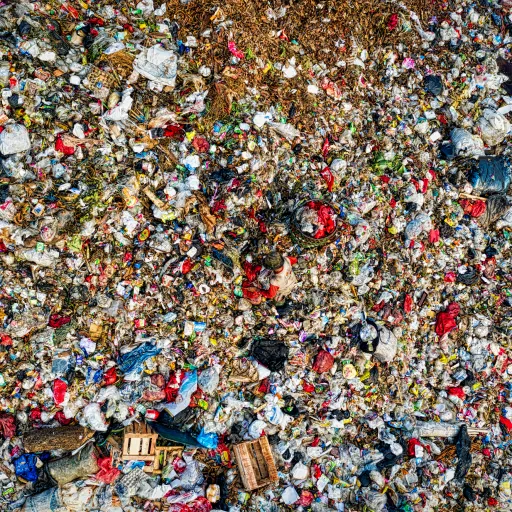
Why should companies act?
Paper, cardboard, plastic bottles, packaging and cans can be separated where they are produced. Without organised sorting, they end up mixed with ordinary waste, which makes recovery harder. A company can act at several levels:
- Identify the waste its activities generate
- Install suitable sorting equipment
- Raise employee awareness
- Organise regular collection of recyclables
- Track the quantities collected
- Assess results and identify improvements
This turns a day-to-day management obligation into measurable environmental action.
How to set up an ISO 26000 approach in an Algerian company

Adopting ISO 26000 does not require starting with a complex programme.
The approach can be built step by step, according to the organisation's resources, activities and issues.
- 1
Run a CSR diagnosis
The company starts by analysing its activities, practices and impacts. The diagnosis should cover the seven core subjects.
- 2
Identify stakeholders
Map the people affected by the company's activities: employees, customers, suppliers, partners, local authorities and communities. Their expectations should shape the priorities.
- 3
Set priority issues
Not every issue matters equally to every organisation. An industrial company may focus on controlling its environmental impacts, while a services firm may focus more on working conditions, responsible purchasing and resource use.
- 4
Build an action plan
Priorities must be turned into concrete objectives. For example:
- Reduce paper consumption
- Improve waste sorting
- Reduce packaging
- Run internal training
- Strengthen employee safety
- Improve transparency with suppliers
- 5
Define performance indicators
Each objective should have an indicator to track its progress.
- 6
Assess and communicate results
The company should track progress, document its actions and report transparently on results. The approach should be reviewed regularly to find areas for improvement.
Track results with
Which CSR indicators should a company track?

A CSR approach needs indicators suited to each organisation's issues.
Here is a selection of indicators that can go into a CSR dashboard.
| Area | Indicator | Unit |
|---|---|---|
| Environment | Total waste produced | kg or tonnes |
| Environment | Recyclables collected | kg or tonnes |
| Environment | Paper recovered | kg |
| Environment | Plastic recovered | kg |
| Environment | Cardboard recovered | kg |
| Environment | Share of waste sent for recovery | % |
| Resources | Water consumption | m³ |
| Resources | Electricity consumption | kWh |
| Climate | Greenhouse gas emissions | tCO₂e |
| Social | Employees trained | People |
| Social | Lost-time injury frequency rate | OHS indicator |
| Governance | CSR actions carried out | Number |
| Governance | Share of suppliers assessed on responsible criteria | % |
It is important to distinguish measured indicators from estimated ones. For example, the weight of waste collected can be established by weighing, whereas avoided emissions or resource savings must be calculated using documented conversion factors.
A reliable indicator always states its calculation method, period and data source.
ISO 26000 and ISO 14001: two complementary frameworks
Companies sometimes confuse ISO 26000 with ISO 14001. Yet their goals and scope are different.
| Criterion | ISO 26000 | ISO 14001 |
|---|---|---|
| Field | Social responsibility | Environmental management |
| Goal | Guide the organisation towards responsible behaviour | Set up an environmental management system |
| Scope | Social, environmental, economic and ethical | Environmental impacts |
| Type | Guidance | Management system requirements |
| Certification | Not certifiable | Certifiable |
| Applies to | All organisations | All organisations |
ISO 26000 helps structure an overall CSR approach, while ISO 14001 organises and improves environmental management. A company can use both together (read our article on ISO 14001:2026).
Nrecycli Office: an operational partner for the environmental side of your CSR approach
Social responsibility should not remain a commitment in an internal policy or annual report. It must translate into concrete action in day-to-day operations. Waste management is one area where companies can make measurable improvements.
Nrecycli Office helps companies, administrations and organisations set up sorting at source, collection and traceability of recyclables. Specialised in collecting household-type waste from businesses, Nrecycli Office offers an integrated approach combining equipment, awareness, collection and environmental tracking.
Sorting equipment suited to your organisation
Solutions tailored to workspaces and business needs, making it easier to separate materials and structure daily sorting habits:
- Single-, dual- and triple-stream sorting stations
- Office bins and sorting equipment
- Containers and collection equipment
- Indoor and outdoor solutions
Engaging employees in responsible practices
An environmental approach succeeds only if employees are involved. Nrecycli Office runs training and awareness sessions on accepted materials, sorting instructions and good separation habits (mistakes to avoid).
Our approach
Organising the collection of recyclables
Nrecycli Office provides regular or on-demand pickups, according to each client's needs, in the wilayas of Algiers and Blida. Materials are sent to the appropriate recovery channels depending on their type and what partner facilities can handle. Main materials accepted:
EcoTracker: track and measure environmental performance
Traceability is essential to a credible CSR approach. EcoTracker is a digital tool for monitoring your recyclables, and its data can feed the environmental indicators of your CSR approach. It lets you:
- View quantities collected by material
- Follow collection operations over time
- See estimated environmental impact indicators
- Keep a history of your data
- Prepare environmental reports more easily
Environmental report and recycling certificate
Depending on the services agreed, the company can receive an environmental report and a recycling certificate documenting the quantities recovered and the operations carried out. These can serve as evidence for internal tracking of environmental commitments and for preparing CSR communications.
Scope of our support
Nrecycli Office supports companies on the operational side of their environmental approach. Nrecycli Office does not issue ISO 26000 certification (the standard is not certifiable) and does not replace a certification or assessment body.

How Nrecycli Office helps
Equipment, awareness, collection and EcoTracker data: one partner to turn the waste side of your CSR approach into documented results.
FAQ: ISO 26000 and CSR in Algeria
What is ISO 26000?
ISO 26000 is an international standard that gives guidance on building social responsibility into an organisation's activities. See definition and scope.
Is ISO 26000 mandatory in Algeria?
No. ISO 26000 is voluntary. It does not replace the legal and regulatory obligations that apply to Algerian companies, such as Law No. 01-19 on waste management.
Can you get ISO 26000 certification?
No. ISO 26000 is not a certifiable standard. It is used to guide and assess a social responsibility approach.
What is the difference between ISO 26000 and ISO 14001?
ISO 26000 covers social responsibility as a whole, while ISO 14001 deals specifically with environmental management systems. See the comparison.
How can an Algerian SME start a CSR approach?
It can start with a diagnosis of its activities, identify its stakeholders, set its priorities and put tracking indicators in place. See the 6 steps.
From CSR commitments to measurable results
ISO 26000 is a relevant framework for Algerian companies that want to build social responsibility into their strategy.
Studies in Algeria show that initiatives exist, but several challenges remain: structuring the approach, transparency, measuring results and embedding CSR in daily activities.
Environmental issues, waste management in particular, are an area where organisations can act concretely. By installing sorting equipment, engaging employees, organising collection and tracking quantities with EcoTracker, companies can turn their environmental commitments into documented results.
Want to give your CSR approach a concrete, measurable environmental side?
With its collection, sorting-at-source and traceability solutions, Nrecycli Office supports companies through this transition. Contact us to discuss your needs, or get an online quote.
