
Sorting PET plastic bottles is one of the simplest ways to contribute to recycling at work. Yet to ensure quality collection and make recovery easier, a few good practices are essential.
Identify PET bottles
The first step is to recognise which waste is accepted.
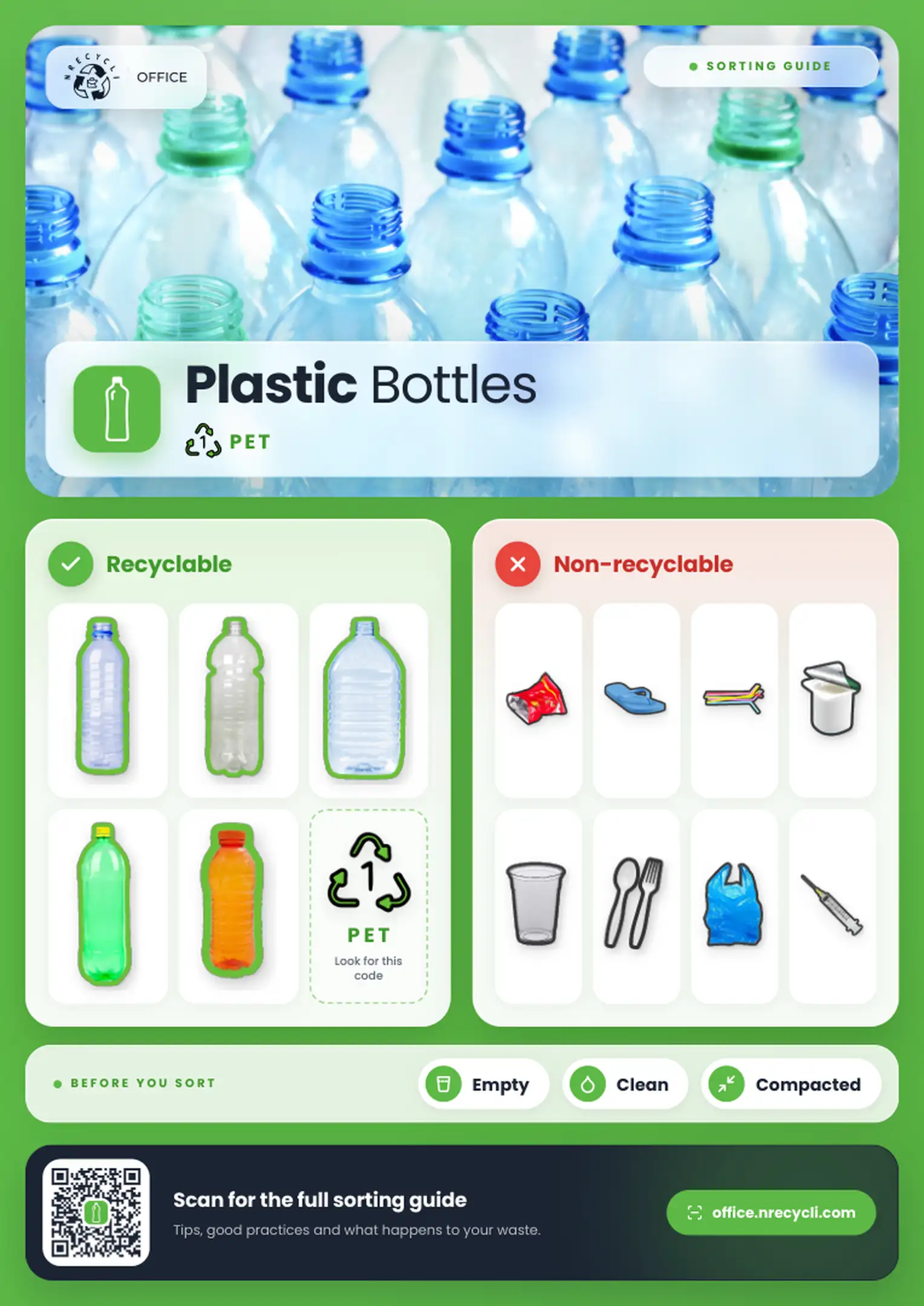
PET (polyethylene terephthalate) is a plastic mainly used to make drink bottles. Examples of accepted waste:
- Mineral water bottles.
- Soft drink bottles.
- Juice bottles and other drinks packaged in PET.
Warning
This category is for PET plastic bottles only. Cups, trays, tubs and other plastic packaging must not go in this bin.
Empty the bottle completely
Before sorting, make sure the bottle is completely empty.
- Pour out any remaining drink.
- Get rid of liquid residue.
- Check that nothing is left inside.
A bottle that still contains liquid can soil the other recyclables and complicate collection and processing.
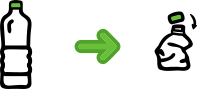
Flatten the bottle to reduce its volume
Once empty, flatten or crush the bottle. This step helps to:
- Considerably reduce the volume of waste.
- Make the most of the space in collection bins.
- Make storage and transport easier.
- Improve the efficiency of collection operations.
Good habit
Flatten your bottle before putting it in the PET bin.
Put the bottle in the right bin
Once prepared, put your bottle in the bin reserved for PET plastic bottles.
Follow the instructions displayed on your sorting station and do not mix different materials.
Sorting correctly from the start makes the collection teams' work easier and helps preserve the quality of the recovered material.
With Nrecycli Office
Nrecycli Office installs sorting stations with clear signage for each material in your premises, trains your staff and collects your recyclables in Algiers and Blida.
From collection to recycling: what happens to your PET bottle?
After sorting, PET bottles are picked up during collection and sent to the appropriate recovery channels.
They can then go through several industrial stages:
- 1
Sorting and inspection
Bottles are separated according to the characteristics of the material.
- 2
Shredding
Bottles are turned into small fragments called flakes.
- 3
Washing
Impurities and residue are removed.
- 4
Processing
The recycled material is prepared for reuse in the manufacture of new products.
Recycling gives a second life to a material that would otherwise become waste.
The 3 habits to remember
Identify
Sort only PET plastic bottles.
Empty
Leave no liquid or residue in the bottle.
Flatten
Reduce its volume before putting it in the PET bin.
