


**Law No. 25-02 of 20 February 2025** marks a new stage in the development of environmental regulation in Algeria. By amending and supplementing Law No. 01-19 of 12 December 2001 on the management, control and disposal of waste, it introduces principles closer to the circular economy: eco-design, reuse, repair, waste recovery and extended producer responsibility.
Beyond the regulation itself, the reform raises a key question for businesses: how can they better organise their waste, reduce their environmental impact and ensure better traceability of the materials their activities produce?
For companies, producers, distributors and recycling players, Law 25-02 is a change of perspective. Waste is no longer seen only as something to get rid of, but as a resource that can be reused, transformed or recovered.
- What is Law 25-02 and how does it change Law 01-19?
- What do EPR and the eco-contribution mean for businesses?
- Which penalties apply?
- How can you prepare now?
What is Law 25-02 in Algeria?
Law No. 25-02 of 20 February 2025 amends and supplements certain provisions of Law No. 01-19 of 12 December 2001 on the management, control and disposal of waste.
It was published in the Official Journal of the People’s Democratic Republic of Algeria No. 12 on 23 February 2025.
Its aim is to strengthen the national waste management framework and move practices towards an integrated approach based on prevention, sorting, recovery and the circular economy.
The reform notably introduces:
- Eco-design and the prevention of waste
- A new hierarchy of treatment methods
- The principle of extended producer responsibility
- An eco-contribution
- A national waste information and mapping system
- National and local waste management plans
- The gradual replacement of single-use plastic products
- Stronger rules on special and hazardous waste
- New penalties for certain offences
Law 25-02 does not fully replace Law 01-19: it updates and supplements several of its provisions to adapt the legal framework to today’s resource and environmental challenges. For the basics of the 2001 text, see our guide to Law 01-19.
The main changes introduced by Law 25-02
**A new waste management hierarchy.** One important change is the order of priority for treatment methods. The law favours solutions that extend product life and limit disposal. The order set by the text is:
Preparing for reuse
Preparing a product or waste so that it can be used again.
Reuse
Giving a product or material a new use.
Repair
Restoring an item to extend its use.
Disposal
Using disposal only when no other solution is possible.
What this means for businesses
It becomes essential to identify the materials you generate, separate recyclable streams and look for reuse and recovery options before disposal.
Extended producer responsibility (EPR)
EPR is one of the reform’s core principles. Amended Article 7 provides that every waste generator and/or holder must ensure, directly or through **eco-organisations**, the recovery of waste from the materials they import or sell and the products they manufacture.
This makes those who place products on the market (manufacturers, importers and distributors) more accountable. Waste management no longer rests solely on local authorities or collection operators.
How eco-organisations are set up, organised and run will be defined by regulation.
An eco-contribution
Every producer or company placing a product on the market must pay an environmental contribution towards managing the waste from its products, so environmental costs are better reflected across the life cycle. Practical arrangements are to be set by regulation.
Gradual replacement of single-use plastics
The law provides for the **gradual** replacement of single-use plastic products, with implementing rules left to regulation. It is not a general, immediate ban. For businesses: review packaging, consumables and purchasing.
Eco-design and waste prevention
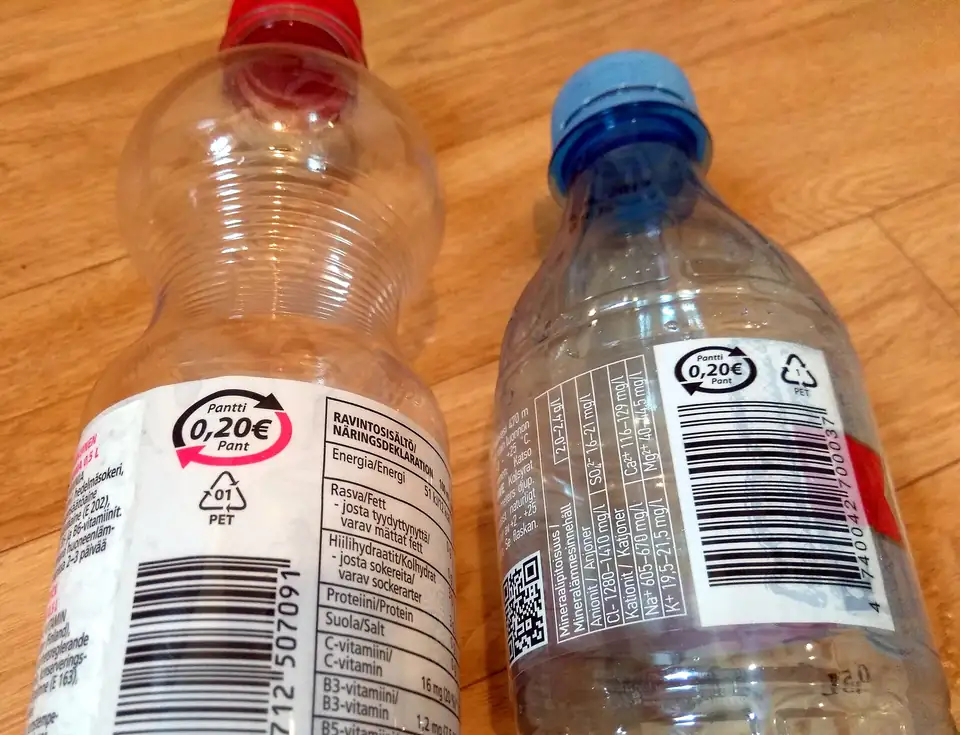
Law 25-02 explicitly adds eco-design to the principles of waste management: building environmental considerations into a product from the design stage to reduce its impact over its whole life cycle.
- Using fewer raw materials
- Cutting unnecessary packaging
- Choosing recyclable or reusable materials
- Making products more durable
- Reducing waste during manufacturing and after use
Prevention becomes a priority: the best way to manage waste starts with producing less of it.
Digitalising waste management in Algeria
Under **Article 5 bis 1**, Law 25-02 provides for a national information and mapping system dedicated to waste management, a major step towards more structured environmental data.
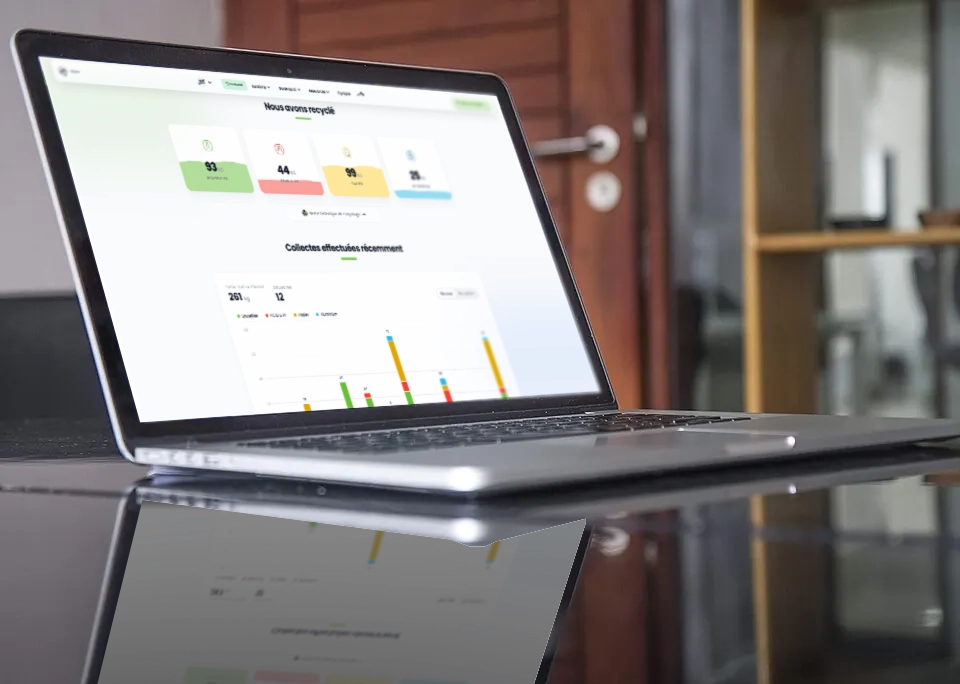
The aim is notably to better understand:
- The types of waste produced
- The quantities generated
- Where waste comes from
- Existing collection and sorting systems
- Treatment and recovery facilities
- Available capacity and future needs
The same approach underpins the new waste management plans, which must rely on inventories and local data.
For businesses, it highlights the value of reliable data on their own streams: quantities collected, material types, collection frequency and where the waste goes. Traceability becomes an environmental management tool and a way to measure results (see also the ISO 14001 indicators).
How Nrecycli Office helps
With [EcoTracker](/#ecotracker), quantities collected by material, the number of collections and volume trends are available online, ready for your internal reports.
New national and local waste management plans
The law introduces several planning tools to improve coordination between public authorities and waste managers.
The national integrated waste management plan
Covering household-type and inert waste, it must notably include:
- An inventory of quantities produced each year
- Waste with recovery potential
- Tracking of landfilled and recovered volumes
- Treatment channels to organise
- The state of existing facilities
- The capacity needed for sorting and recycling
Wilaya-level management schemes
An integrated wilaya scheme, drawn up under the wali’s authority with the municipalities and their management bodies, then approved by the competent wali. It records:
- Waste produced in the area
- Collection and sorting systems
- Existing facilities
- Recycling and recovery needs
- Marine litter, for coastal wilayas
Local planning can help organise recycling channels and identify local collection and treatment needs more precisely.
Organic waste and energy recovery
The reform is not only about plastic waste, paper or cardboard.
Biological treatment of organic waste
Organic waste must first undergo biological treatment by **composting and/or anaerobic digestion**, except animal-derived waste, which requires specific management.
Energy recovery from biogas
Biogas generated by household-type waste treatment facilities or rehabilitated landfills must be recovered for energy.
These provisions strengthen biological and energy recovery and open the way for new channels: composting, anaerobic digestion and energy recovery.
What do the figures say about waste in Algeria?
The reform comes at a time when the volume of waste produced in Algeria is a major environmental and economic issue.
According to figures attributed to the National Waste Agency (AND) and reported by the daily Horizons in March 2025, Algeria produced **13.4 million tonnes** of household-type waste in 2024.
13.4 Mt
Household-type waste
Produced in 2024.
53%
Organic matter
Share of household waste.
15%
Plastic waste
Reported share.
DZD 200 bn
Value of recyclables
Estimated annual economic value.
Read with care
These are figures reported in the press from an AND statement, not figures written into Law 25-02 or a performance measure produced by it. For more benchmarks, see recycling in Algeria in figures.
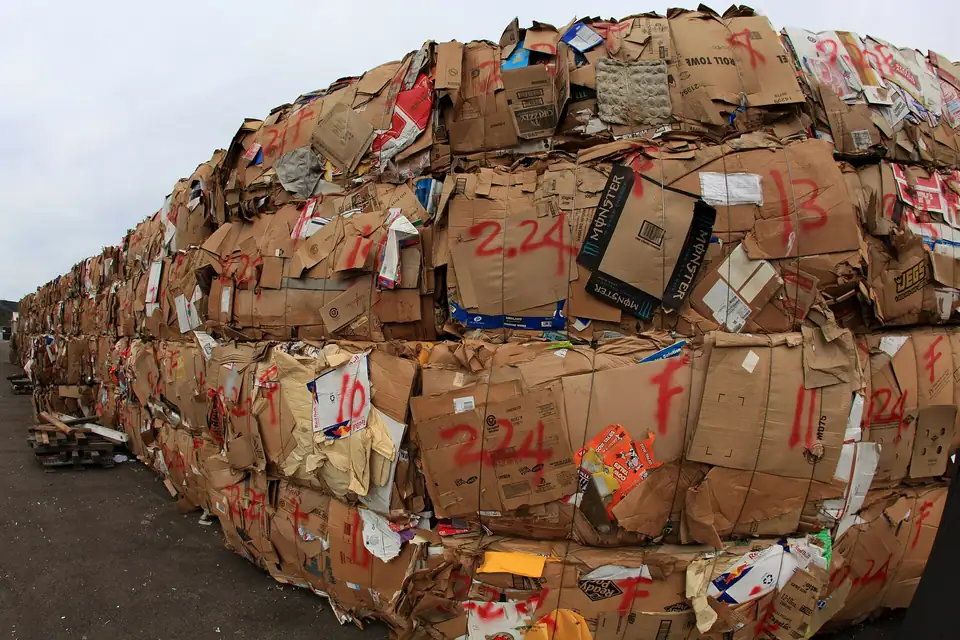
The main challenge remains operational: identifying sources, organising collection, improving sorting at source and keeping recycling channels supplied with good-quality materials.
Without organised collection and separation of materials, much of the recovery potential remains hard to tap.
Which new obligations and penalties should you know about?
Law 25-02 strengthens several waste management provisions and sets penalties for offences. For businesses, **Article 56** deserves particular attention.
It sets a fine of **DZD 20,000 to 80,000** for any natural or legal person carrying out an industrial, commercial, craft or other activity who dumps or abandons household-type waste, or refuses to use the collection and sorting system provided by the bodies designated by law.
The text also provides for:
| Offence under the law | Penalty |
|---|---|
| Dumping or abandoning household-type waste (individual) | DZD 2,000 to 10,000 |
| Dumping or abandoning household-type waste (person carrying out an activity) | DZD 20,000 to 80,000 |
| Failure to declare hazardous special waste | DZD 70,000 to 140,000 |
| Mixing hazardous special waste with other waste | 6 months to 2 years’ imprisonment and a fine of DZD 300,000 to 1,200,000 |
| Handing hazardous special waste to an unauthorised facility | 1 to 3 years’ imprisonment and a fine of DZD 600,000 to 1,800,000 |
| Operating a non-compliant treatment facility | 1 to 5 years’ imprisonment and a fine of DZD 600,000 to 3,000,000 |
Avoid shortcuts
These penalties apply to specific offences defined by the text. They should not be read as an automatic fine for any company that does not have its own sorting bins.
The law also tightens the rules on handing over, treating and using special and hazardous waste, which must be treated in facilities authorised by the competent authorities.
The distinction between household-type, special and hazardous special waste is essential: collection and treatment channels are not interchangeable.
How can businesses prepare for Law 25-02?
Even while some regulatory details are still to come, companies can already adopt practices in line with the law. Here are five concrete actions.
- 1
Take a waste inventory
Identify the main waste your activity generates, its origin, type and quantity. This shows your existing streams and which materials can be reused or recovered.
- 2
Organise sorting at source
Install suitable equipment to separate recyclables where they are produced. In offices, this can include:
- 3
Organise regular collection
Sorting needs a collection setup matched to your volumes and frequency. Scheduled collection prevents build-up, makes it easier to route materials to recovery channels and keeps the system running smoothly.
- 4
Track and trace
Keep structured records of quantities collected, material categories and operations carried out. A tracking sheet or digital tool can measure:
- Weight of waste collected by material
- Number of collections
- Volume trends over time
- Share of materials sent for recovery
- Estimated environmental results

- 5
Engage employees
Successful sorting also depends on the people using the equipment. Clear instructions, suitable signage and awareness sessions cut sorting errors and improve the quality of materials collected.

An effective system has to be understood and used every day. These indicators also support environmental commitments, whether in a CSR approach or an ISO 14001 management system.
How does Nrecycli Office support businesses through this change?
Law 25-02 highlights the importance of collecting, sorting and recovering waste. Putting this into practice requires the right organisation, suitable equipment and regular tracking.
That is the purpose of Nrecycli Office, a solution specialised in collecting household-type waste from businesses in Algeria, combining equipment, awareness, collection and traceability.
Sorting equipment
Bins and sorting stations to separate recyclables where they are produced, make sorting easier and improve the quality of recovered materials.
See the equipmentCollection of recyclables
Collections scheduled to match each company’s needs and volumes, for:
- PET
- HDPE
- PP
- Paper and cardboard
- Aluminium
EcoTracker: digital tracking
A tracking and monitoring tool to view quantities collected, follow results over time and feed your environmental reporting.
Training and awareness
Awareness sessions and sorting instructions tailored to the materials we handle: equipment alone does not guarantee good sorting.
Environmental report and traceability
A report summarising quantities collected and results, plus a recycling certificate for the operations carried out.
Our scope
Nrecycli Office acts as an operational partner for collection, sorting at source and traceability. It does not replace regulatory authorities, authorised special-waste treatment facilities or the eco-organisations provided for by law.
Law 25-02: a step towards a circular economy in Algeria
Law 25-02 is a significant development in Algeria’s waste legislation. By adding eco-design, extended producer responsibility, the eco-contribution, local planning and data digitalisation, it lays stronger foundations for integrated resource management.
Its success will also depend on implementation: available infrastructure, organised channels, collection quality, recycling capacity and the involvement of economic players.
For businesses, the challenge now is to move from waste management focused on removal to a structured, measurable approach geared towards recovery.
Recycling doesn’t start at the plant. It starts when each company organises how its waste is sorted and collected.
With Nrecycli Office, structure that first step and make your recycling transparent and measurable. Contact us for an assessment of your needs, or get an online quote.
FAQ: Law 25-02 in Algeria
What is Law 25-02 in Algeria?
Law No. 25-02 of 20 February 2025 amends and supplements Law No. 01-19 on the management, control and disposal of waste. It strengthens the principles of prevention, recovery and the circular economy.
What is the difference between Law 01-19 and Law 25-02?
Law 01-19, adopted in 2001, is Algeria’s original legal framework for waste management. Law 25-02, published in 2025, updates it by introducing eco-design, extended producer responsibility, the eco-contribution and new planning and tracking tools.
Does Law 25-02 apply to private companies?
Yes. It includes provisions for natural and legal persons carrying out industrial, commercial, craft or other activities, and sets responsibilities for waste generators, holders, producers and companies placing products on the market.
What is extended producer responsibility (EPR)?
A principle under which producers and companies placing products on the market must contribute to managing the waste from the materials and products they manufacture, import or sell, as set out in the law and its implementing texts.
Does Law 25-02 introduce an eco-contribution?
Yes. Article 7 bis 1 provides for an environmental contribution to fund the management of waste from products placed on the market. Implementing rules are to be set by regulation.
Does Law 25-02 ban all single-use plastics?
No. Article 10 bis provides for the gradual replacement of single-use plastic products. Implementing rules are to be defined by regulation.
What fines apply to businesses?
Article 56 sets a fine of DZD 20,000 to 80,000 for a natural or legal person carrying out an activity who dumps or abandons household-type waste, or refuses to use the collection and sorting system provided. Other offences, particularly involving hazardous special waste, carry heavier penalties.
How can a company improve its waste management?
By taking a waste inventory, organising sorting at source, scheduling collection of recyclables, engaging employees and tracking quantities collected with traceability tools (the 5 actions).
Can Nrecycli Office help a company set up sorting?
Yes. Nrecycli Office provides sorting equipment, awareness sessions, collection services for recyclables and a digital tracking tool, EcoTracker.
Read next
